Immunology Course
PTTs: Ensuring Blood Compatibility for Optimal Patient Benefit.
Hemagglutination
The purpose of pretransfusion tests is to ensure that the patient receives compatible blood in the event of a transfusion. The blood should be of the best possible benefit to the patient.
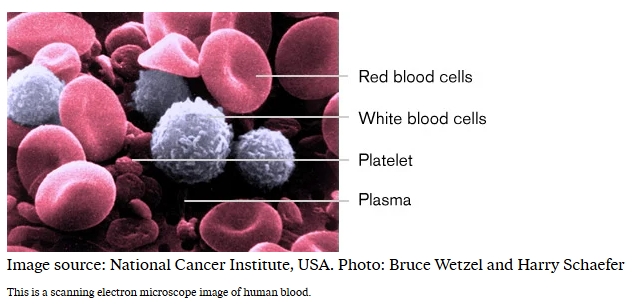
What is blood made up of ?
An adult human has about 4–6 liters of blood circulating in the body. Blood consists of several types of cells floating around in a fluid called plasma. The red blood cells contain hemoglobin, a protein that binds oxygen. Red blood cells transport oxygen to, and remove carbon dioxide from, the body tissues. The white blood cells fight infection. One type of infection-fighting white blood cells fight disease by producing antibodies and thus destroying foreign materia. The platelets help the blood to clot, if you get a wound for example. The plasma contains salts and various kinds of proteins.
ABO and the Rh blood type
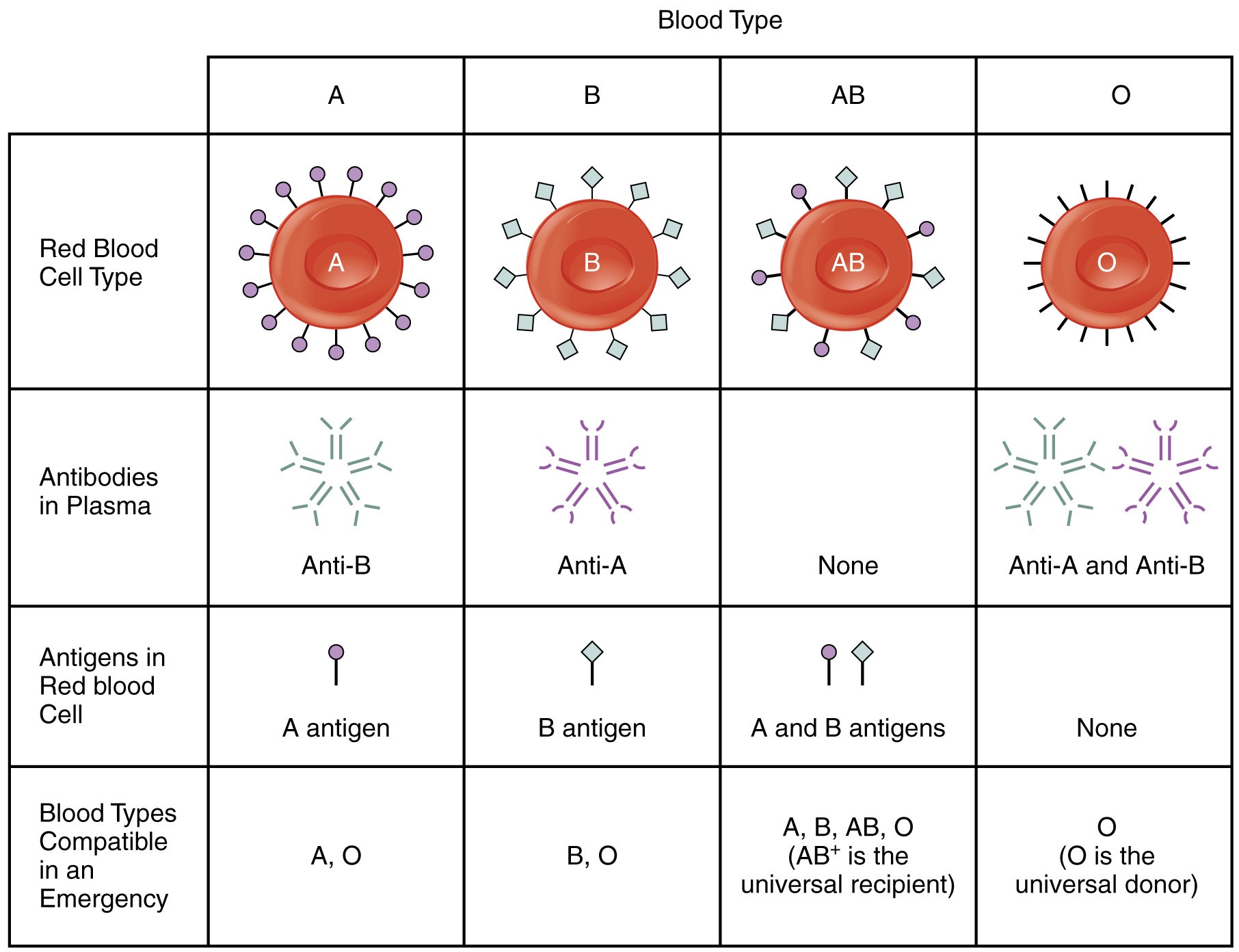
There are many blood group systems known today, but the ABO and the Rh blood groups are the most important ones used for blood transfusions. ABO blood group system, the classification of human blood based on the inherited properties of red blood cells (erythrocytes) as determined by the presence or absence of the antigens A and B, which are carried on the surface of the red cells. Persons may thus have type A, type B, type O, or type AB blood The Rh blood group is classified according to the presence or absence of a second erythrocyte antigen identified as Rh. Although dozens of Rh antigens have been identified, only one, designated D, is clinically important. Those who have the Rh D antigen present on their erythrocytes are described as Rh positive (Rh+) and those who lack it are Rh negative (Rh−). Note that the Rh group is distinct from the ABO group, so any individual, no matter their ABO blood type, may have or lack this Rh antigen. When identifying a patient’s blood type, the Rh group is designated by adding the word positive or negative to the ABO type. For example, A positive (A+) means ABO group A blood with the Rh antigen present, and AB negative (AB−) means ABO group AB blood without the Rh antigen. People belong to either of eight different blood types: A Rh+, A Rh-, B Rh+, B Rh-, AB RH+, AB Rh-, 0 Rh+, or 0 Rh.
Hemagglutination
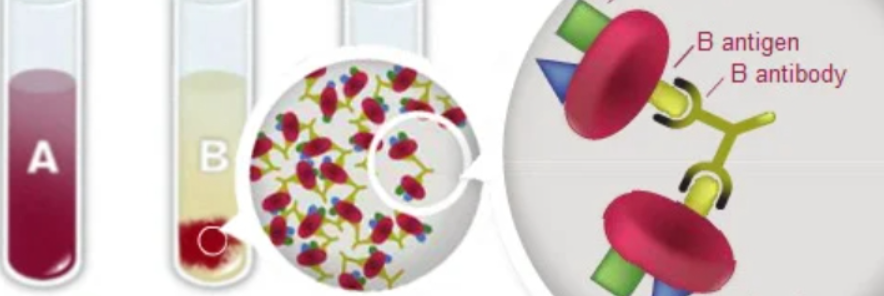
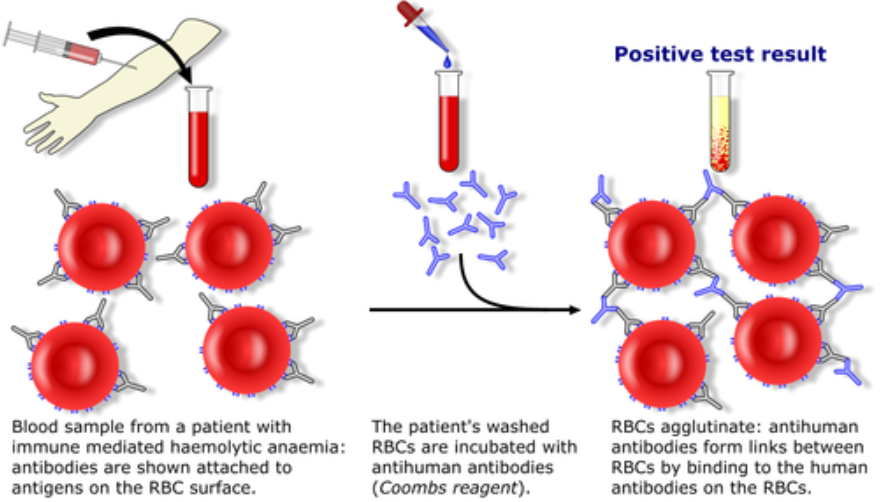
Agglutination is the process of the arms of the Y-shaped antibodies attach randomly to more than one non-self erythrocyte surface, they form clumps of erythrocytes. Hemagglutination is a specific form of agglutination that involves red blood cells (RBCs) as a source of antigen. It can be used to determine type blood cells for transfusion, to identify bacterial cultures, and to detect the presence and relative amount of specific antibody in a patient’s serum.
To determine blood type, you need to find out which antigens are present. You can work that out by mixing the patient’s blood with three different reagents containing either of the three antibodies: A, B or Rh. Then you take a look at in which mixtures has agglutination occurred? The agglutination indicates that the blood has reacted with a certain antibody and is therefore not compatible with blood containing that kind of antibody. If the blood does not agglutinate, it indicates that the blood does not have the antigens binding the special antibody in the reagent. The blood will agglutinate if the antigens in the patient's blood match the antibodies in the test tube. Antibodies attach to A antigens - they match like a lock and key - and thus form a clump of red blood cells. In the same way B antibodies attach to B antigens and Rh antibodies to Rh antigens. In the test tubes where agglutination has occurred, the patient's red blood cells have been linked together, like bunches of grapes, instead of floating around one by one.